
Demolition contractors in Sheffield
Twenty minutes from our yard, with our own plant, our own asbestos team and our own transport.
Sheffield
Six miles from our yard
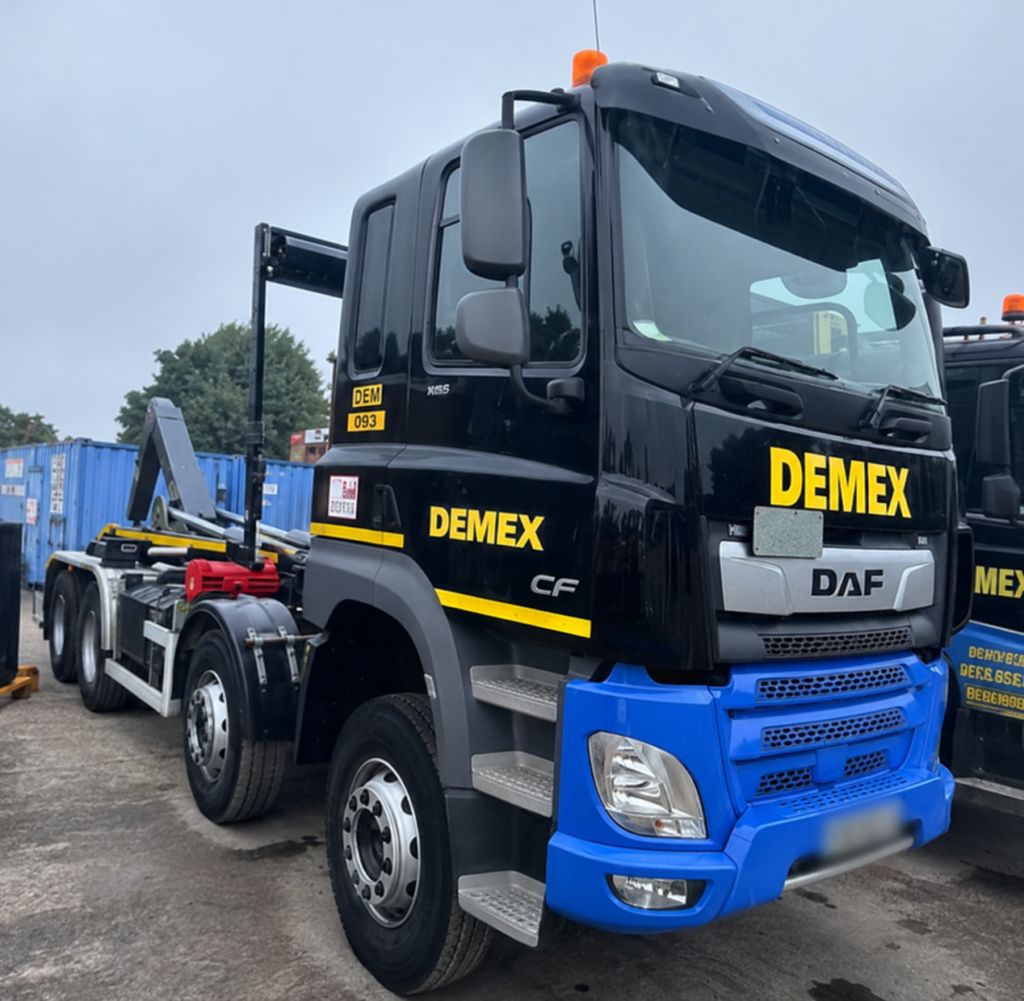
Our plant, our transport and our asbestos team all work out of Bernera Works in Rotherham, about twenty minutes from Sheffield city centre. On a Sheffield job that means the machine that arrives is ours, the driver who moved it is ours, and when asbestos appears halfway through we are not waiting on somebody else’s diary.
We have taken down some of the city’s larger structures, Don Valley Stadium among them, for Sheffield City Council. A lot of what is left to demolish here was built for steel and cutlery, and buildings of that age have usually been altered several times without a complete record.
What we do
Demolition work across Sheffield
City centre demolition
Tight sites with a live frontage, a tram line at the kerb or a neighbour still trading through it.
Former industrial buildings
Steelworks, forges and cutlery works, where asbestos was applied to structure as well as to surfaces.
High reach
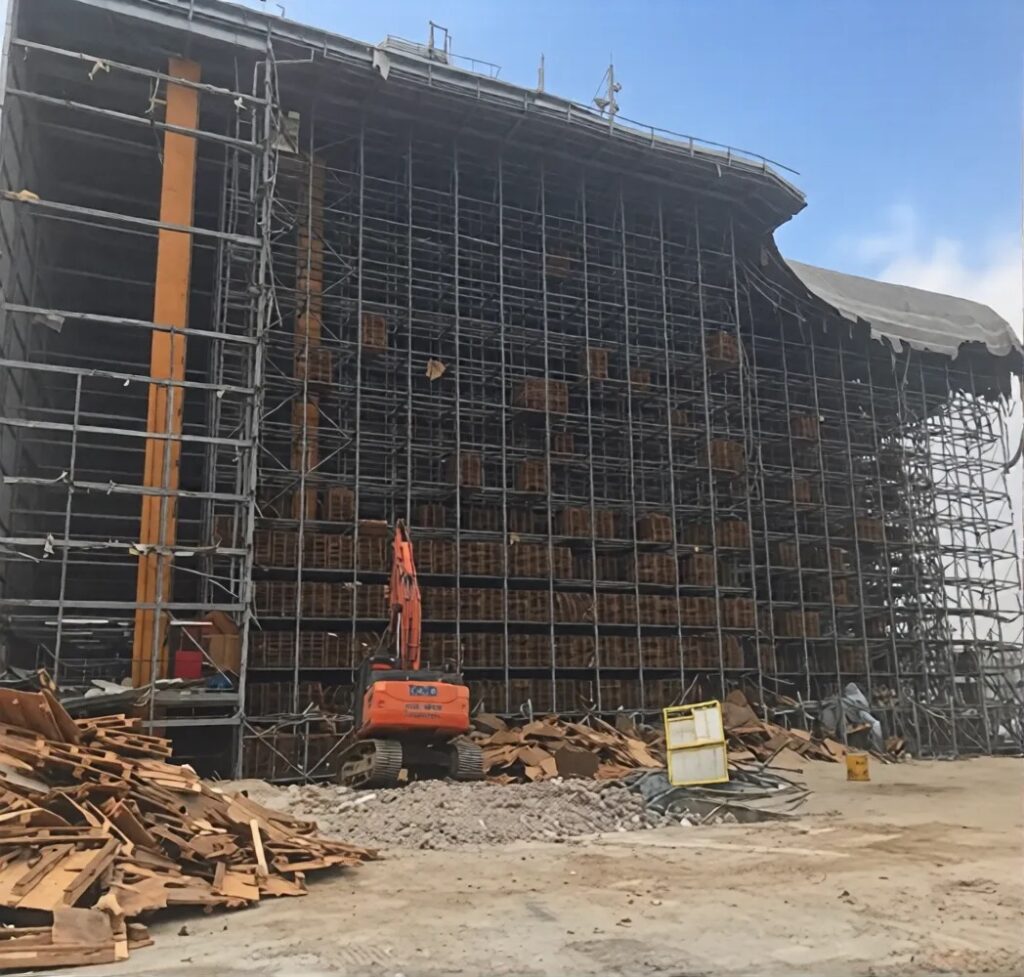
Reaching height without putting people at height, on the taller frames around the city.
Top down
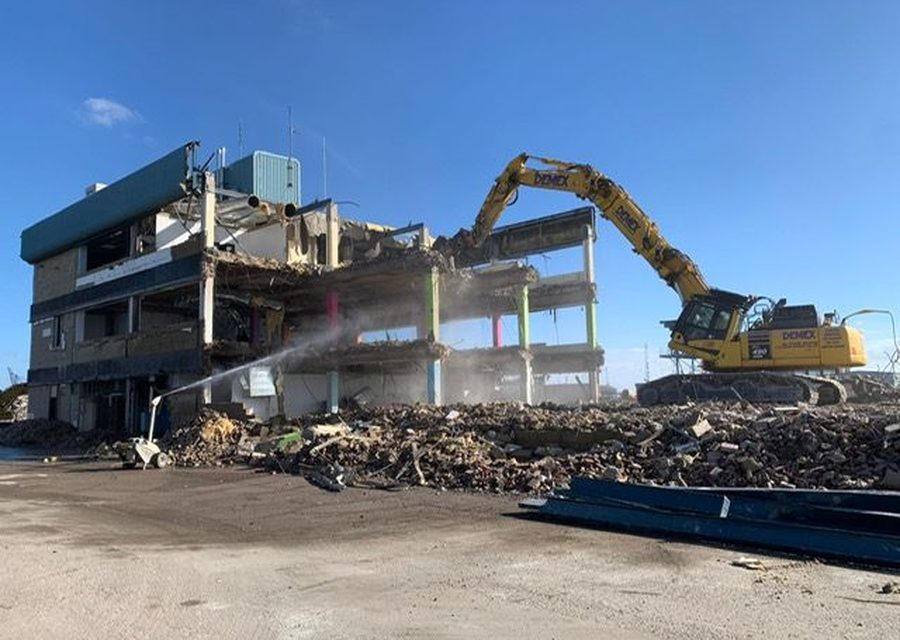
Floor by floor where the street is too narrow to take a building down any other way.
Enabling works and clearance
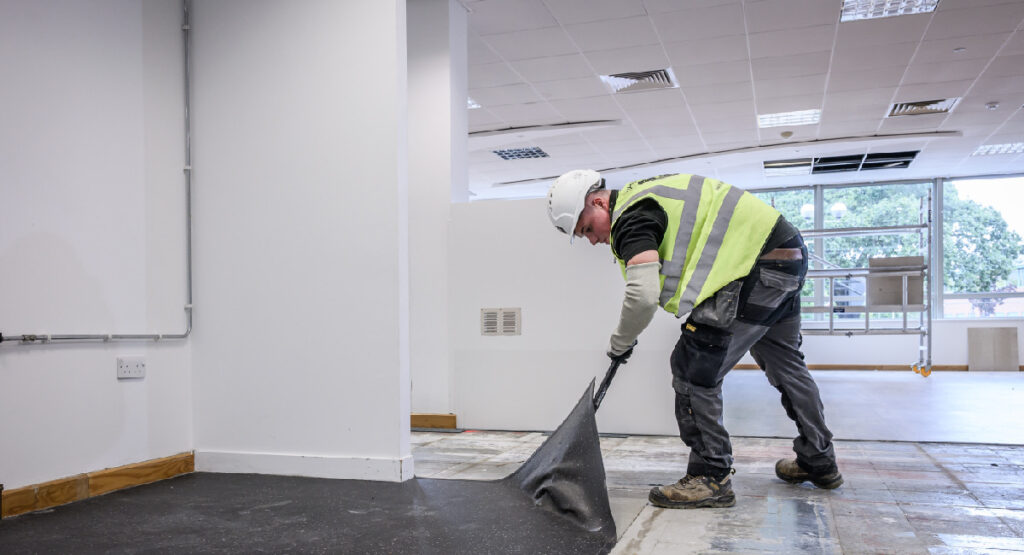
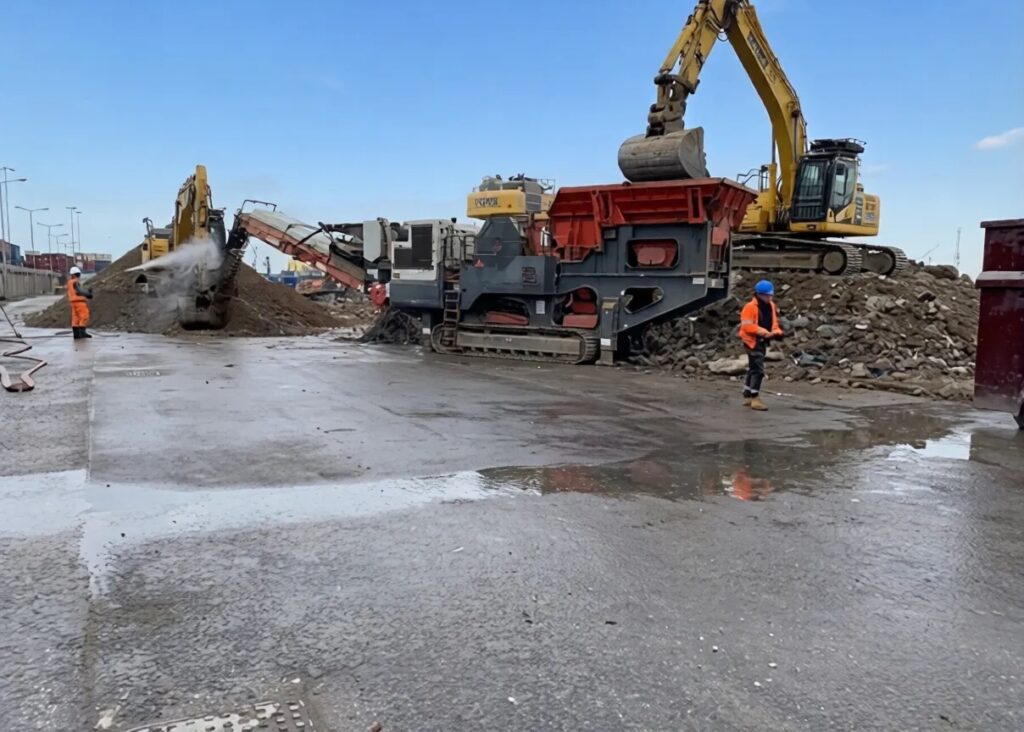
Left level, crushed and ready for the next contractor to start on.
Asbestos removal
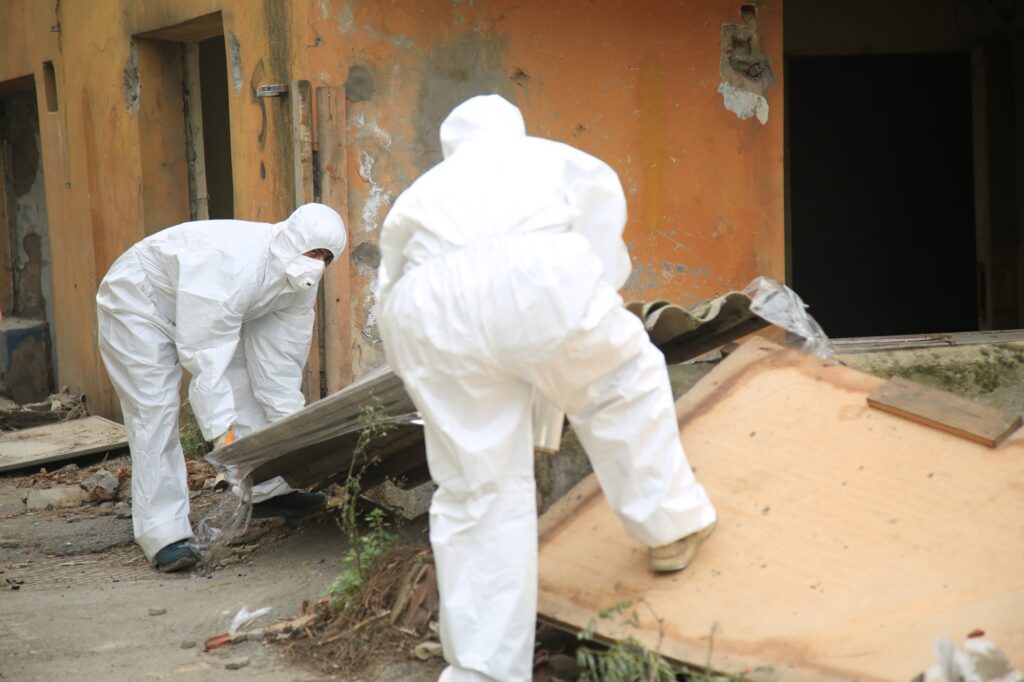
Our own team, so the programme does not stop the week something turns up.
Locally
Don Valley Stadium
We demolished Don Valley Stadium for Sheffield City Council, recovering the structural steel and processing it through the group. The value of the recovered material covered the cost of the work, so the demolition was delivered at nil cost to the council.
In detail
Demolition in Sheffield, in practice
The building stock
Sheffield has a great deal of building left over from steel and cutlery, and much of it is still standing in Attercliffe, Brightside and Tinsley. Buildings from that era were altered repeatedly, often without record, and the asbestos in them was applied to structure rather than just to surfaces. A refurbishment and demolition survey on a building like that is a starting position rather than a finished answer, and the sequence has to be able to absorb what the survey did not reach.
Working in the city centre
The centre is tight, it is on a hill, and a good deal of it sits alongside the Supertram or a street that cannot be closed for long. That changes the order of work more than it changes the machines. Deliveries and removals get booked into the hours the street can take them, dust and noise controls are agreed before anyone mobilises, and the temporary works are designed around the sequence rather than bolted on once the frame is open.
Where the material goes
Concrete and masonry are crushed on site and reused as fill and piling mat where the scheme allows it, which keeps wagons off Sheffield’s roads and off the client’s cost sheet. Structural steel and other metals are recovered and processed through the group. Across our contracts the recycling rate runs at 97%, and only what is genuinely left over goes to a licensed tip.
Where we cover
Across Sheffield and South Yorkshire
Being this close to the city means most of Sheffield is a short run from the yard rather than a mobilisation. We work across the city and out into the rest of South Yorkshire and north Derbyshire, and we take demolition contracts nationwide from the same depot.
- Sheffield city centre
- Attercliffe
- Brightside
- Tinsley
- Darnall
- Handsworth
- Hillsborough
- Ecclesfield
- Chapeltown
- Stocksbridge
- Mosborough
- Dore
- Rotherham
- Doncaster
- Barnsley
- Chesterfield
Questions
Demolition in Sheffield: common questions
How quickly can you get to a site in Sheffield?
Our yard is at Bernera Works in Rotherham, about twenty minutes from the city centre, and the plant and the drivers are ours. For a survey or a look at a site we can usually be there the same week. For an emergency there is a 24 hour number and the response does not depend on anyone else’s availability.
Do you work for Sheffield City Council?
Yes. Don Valley Stadium is the best known of them. We work for local authorities, principal contractors and private clients across the city, and the paperwork that public sector work needs is already in place through our accreditations.
Can you work in the city centre with the tram running and a live frontage?
Most of our work is on sites where something next door is still operating. Working hours, the delivery and removal sequence, and the dust and noise controls are agreed before we mobilise rather than negotiated once we are on site. Where the tram or a footway is affected we deal with the permissions as part of the programme.
The building is an old works. Will there be asbestos?
On a Sheffield industrial building of that age, usually yes, and often in more places than the survey found. We have our own asbestos team for non-licensed and notifiable non-licensed work, so when something appears the work in front of it does not stop while a specialist is found.
The rest of it